
Before you go · Links golf
What Is Links Golf? A Guide for Americans
Where the word comes from, what makes a course a links, and the six changes that help an American golfer score on firm, windy, treeless ground.
The short answer
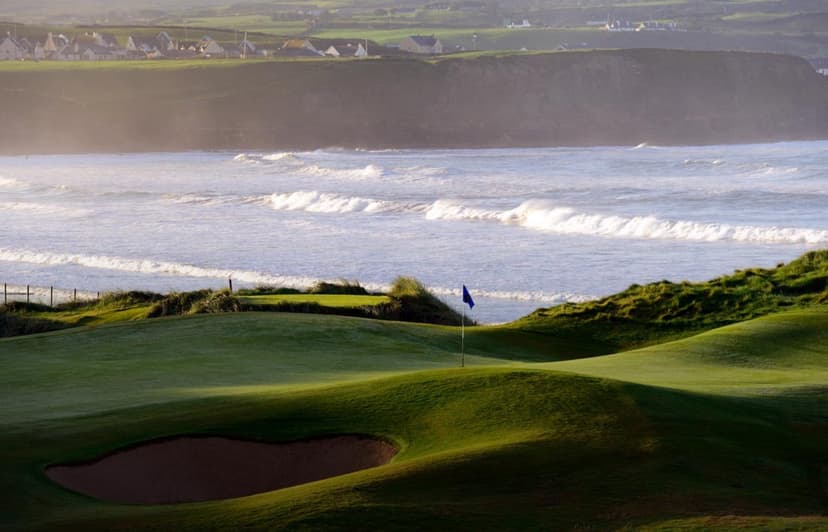
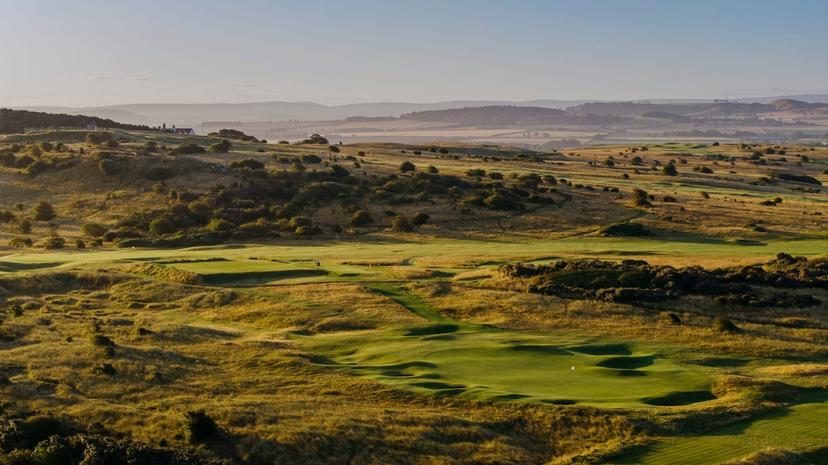
Links golf is golf played on a links: the sandy, rolling ground between the sea and the farmland, where the game began in Scotland. The turf is firm and quick to drain, there are few or no trees, and the wind is part of every shot, so the ball runs along the ground far more than on an American course.
- The word
- Scots, from Old English hlinca ridge, slope or bank
- The ground
- Sandy, by the seafirm turf, few or no trees
- Getting around
- On footcarts are rare
- The rules
- Same as at homeone code from the R&A and USGA
This guide is for the trip captain whose group has asked what is links golf, and what it will mean for their game, before a first trip to Scotland, Northern Ireland or Ireland. It covers where the word comes from, what makes a course a true links, how links compares with the parkland golf most Americans grew up on, six adjustments to make before you fly, and a short list of real links that take visitors.
Where the word "links" comes from
What are the links? To a Scot, the word describes a kind of land before it describes a golf course. The Dictionaries of the Scots Language define links as sandy, undulating ground, generally covered with turf, bent grass and gorse, found near the shore on a flat part of the coast. The root is the Old English hlinc, a ridge, slope or bank, and Scots writing has the word from 1453.
Golf took the name from the ground it was played on. The same dictionary gives a second meaning: a golf course, "the earliest of which were formed on sea-side links, as at St Andrews." That is why you'll hear people in Scotland call almost any course "the links". The Old Course at St Andrews is still played on that seaside ground, and the Fife golf guide covers the other links along the same coast.
You'll often read that the name comes from the land "linking" the sea to the farmland behind it. The Open's own site puts it that way, and it describes the ground well, but the dictionary root is the ridge or bank, not the link.
What is links golf, and what makes a true links course?
A true links course has most of these, and the best-known ones have all of them:
- It's on the coast. The Open describes links as the strips of turf between shore and sea. A course a few miles inland, however open, isn't one.
- The ground is sand. Sandy soil drains fast, so the turf stays firm and the ball bounces and runs after it lands.
- The land made the course. The holes follow dunes, hollows and humps that were already there. The Open's phrase is that "it is the land that shapes a links course, not the other way round."
- There are few or no trees. Long grass, bent and gorse take their place, which is why a links looks bare to an American eye.
- The wind never stops. With nothing to break it, the wind changes how each hole plays from one day to the next, and often from one hole to the next.
- The bunkers are dug in. Links bunkers are usually small, deep pot bunkers set into the ground, not the broad, shallow, raked bunkers of most American courses.
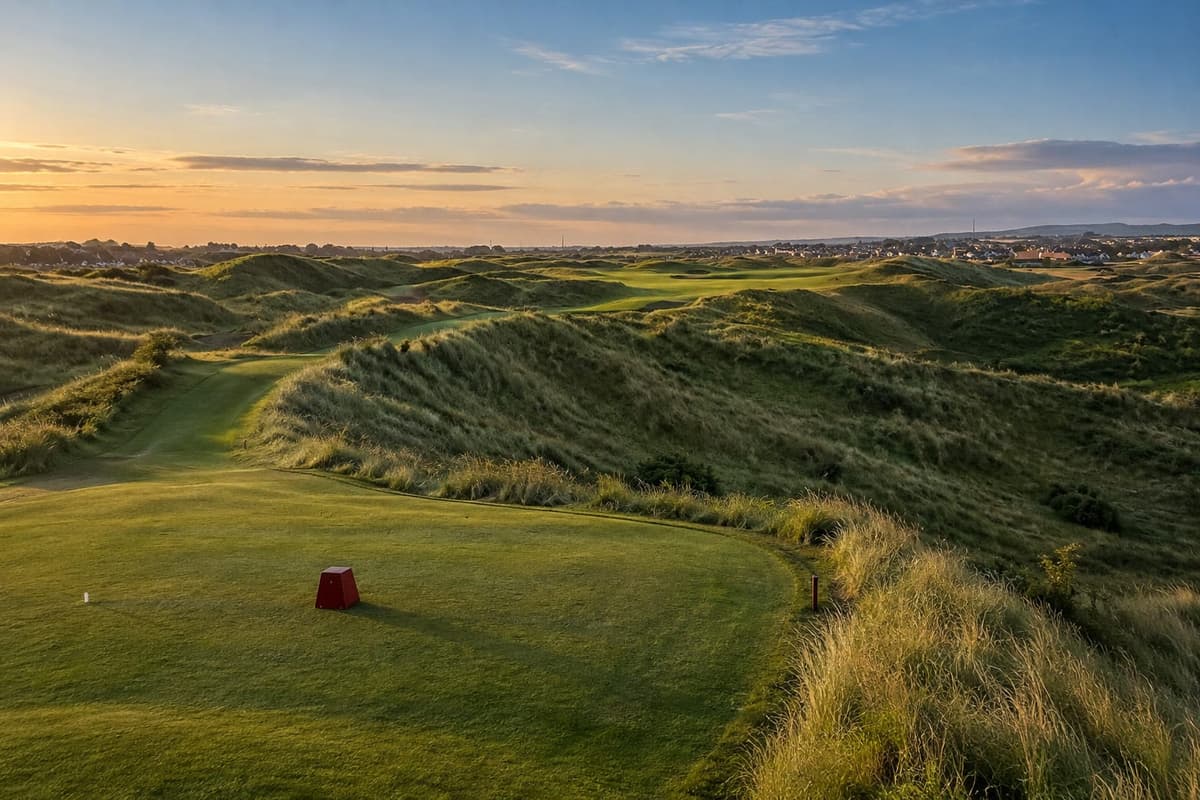
The photo below is from Royal Portrush, where the Dunluce Links runs through dunes on the Causeway Coast. The North Antrim coast golf guide has the links around it, including Portstewart.
Links vs parkland golf
"Parkland" is the name you'll hear in Scotland and Ireland for an inland course with trees and lush grass. Most American courses are closer to parkland than to links, and the table shows what changes when you cross over.
| Feature | Links | Parkland (most US courses) |
|---|---|---|
| Ground | Sandy, firm and fast-draining | Soil, usually softer and watered |
| Wind | Constant, and it changes hole to hole | Trees shelter most holes |
| Trees | Few or none | Line most fairways |
| Bunkers | Small, deep pot bunkers | Larger and shallower |
| Approach shots | Land it short and let it run on | Fly it to the flag and stop it |
| Rough | Long grass and gorse | Mown rough |
| Carts | Rare; most rounds are walked | Common |
Not every famous course in Scotland and Ireland is a links. The King's Course at Gleneagles is an inland moorland course in Perthshire, and Adare Manor, which hosts the 2027 Ryder Cup, is parkland. The Ryder Cup 2027 guide suggests links to pair with that week. Both are worth playing, but if your group has crossed the Atlantic for links golf, check a course's type before you build the trip around it. In the US you'll also see "links-style" on courses built to look like a links, often far from the sea. They borrow the look, without the sand and the coastal wind that make the ball behave differently.
How to play links golf: six adjustments for your game
None of these needs a new swing; most of them change where you aim and which club you take.
1. Plan for the ball to run
On firm links turf the ball keeps going after it lands, on the fairway and around the green. Pick the spot where the ball should land, not where it should finish, and allow for the bounce. Approach shots that would stop by the flag at home can run through the back of a firm green, so land them short and let the slopes feed them on.
2. Keep the ball low in the wind
The Open says the challenge is making the wind your friend, as the direction shifts from one moment to the next. Into the wind, take more club and make a smoother swing to keep the ball down. Downwind, expect it to fly and run further than the yardage says. A punch shot or a low, running approach is worth practicing before you go.
3. Putt from off the green
The grass around a links green is usually cut short and firm, with no thick fringe to grab the ball. From there a putter, or a low chip with a mid iron, is often safer than a lofted pitch, which can check up short or skip past. At home you might call it a Texas wedge; on a links you'll use it from well off the green.
4. Stay out of pot bunkers
Pot bunkers are small, deep and often hidden from the tee, so find out where they are before you hit, from the course guide or your caddie. The guide to how to play the Old Course explains what its caddies do for a first-timer. If you go in and the face is too steep to clear toward the flag, play out sideways or backward. Losing one shot that way usually costs less than several attempts at a face you can't clear.
5. Take a caddie
At several of the best-known links a caddie isn't optional. Royal County Down, Ballybunion and Lahinch require at least one caddie per group, and Prestwick strongly recommends one. A good caddie gives you the line off the tee when you can't see the landing area, knows where the bunkers are, and tells you how far the ball will run, which is most of what a first-timer is missing.
6. Walk, and pack for the weather
Plan on walking every round. Kingsbarns, Prestwick and Royal Dornoch allow a buggy (the local word for a cart) only with a medical certificate, and Royal County Down, Lahinch, North Berwick and Cruden Bay have none at all. Hire a trolley (a pull cart) if you don't take a caddie, and pack waterproofs and layers, because a links has no shelter from wind or rain. Keep up with the group ahead: Prestwick says it welcomes any regular golfer who knows the etiquette and keeps pace.
Make Links Golf Part of Your Trip
Add the links your group wants to play and your travel dates. The planner matches each round to a day the course takes visitors and works out the drives in between.
We can plan your trip for you: course bookings, accommodation, transport, caddies and more.
True links you can play
Every course below is a true links on coastal ground, takes visitors, and golftripbuilder.com has a page for each one listing its visitor days and booking rules. For the full Scottish shortlist with booking routes and 2027 fees, see the best Scottish links for a first trip.
Old Course
FifeWhere the dictionary says golf links began. Visitors Monday to Saturday, mostly through a ballot drawn two days ahead, with a 36 handicap limit. Closed 19 June to 19 July 2027 for The Open.
View Old Course →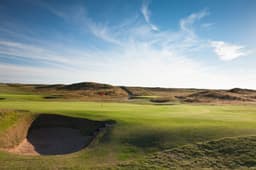
Prestwick
AyrshireHost of the first Open, in 1860. Set visitor times Sunday to Friday; Saturday is members only.
View Prestwick →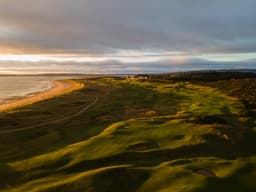
Royal Dornoch
SutherlandVisitors any day of the week when there's space. 2027 requests go to the club by email and are handled in the order they arrive.
View Royal Dornoch →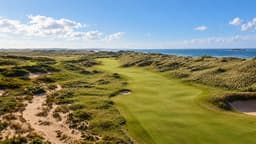
Royal Portrush
Co. AntrimThe Dunluce Links. No visitors on Wednesdays; on other days visitors are fitted around members' times, and the fee is due in full at booking.
View Royal Portrush →
Royal County Down
Co. DownVisitor days are Monday, Tuesday, Thursday, Friday and Sunday, in season only. In the club's words, visitor times are exceptionally limited, and each group must take at least one caddie.
View Royal County Down →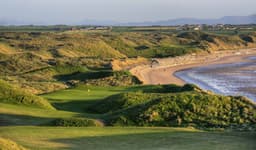
Ballybunion
Co. KerryThe Old Course takes visitors on weekday mornings, mid-April to early October, with a handicap limit of 24 for men and 36 for women.
View Ballybunion →
England has true links too. Royal Liverpool at Hoylake, Royal Birkdale at Southport and Royal St George's at Sandwich take visitors only on set days of the week, so check each course page for 2027 availability. Every course with a page here is in the course directory, and the green fees page lists what each one charges, country by country: Scotland, Northern Ireland, Ireland and England.
The Old Course ballot is explained step by step in how to play the Old Course, and there are longer guides to the Royal Portrush Dunluce Links, Royal County Down and its visitor days, Royal Dornoch, Ballybunion's Old Course and Lahinch. For the links of East Lothian and Co. Down, the region and area guides have the courses and drive times. If Scotland is the plan, start with how to plan a golf trip to Scotland.
When your group knows which links it wants, build a links golf trip in the trip planner. The planner on golftripbuilder.com checks each course's visitor days and handicap rules against your dates and works out the drives between them.
Sources: Dictionaries of the Scots Language, Scottish National Dictionary entry "links"; The Open (The R&A), "About" and "Forged by nature" (31 May 2023), and its Prestwick venue page; the USGA, "A Single Set of Rules". All checked 13 Nov 2026. Course details are each club's own published visitor information, as shown on the course pages linked above.
Links golf FAQ
- What is the difference between links and parkland golf?
- A links sits on sandy ground by the sea, with few trees, firm turf and steady wind, so the ball bounces and runs. A parkland course is inland, usually lined with trees and softer, greener grass, so the ball tends to stop near where it lands. Most American courses are closer to parkland.
- Why is it called links golf?
- Links is the Scots word for sandy, rolling ground near the shore, from the Old English hlinc, a ridge or bank. The earliest golf courses were laid out on that ground, as at St Andrews, so in Scotland links also came to mean a golf course.
- What is a pot bunker?
- A small, deep bunker with a steep face, common on links courses. Many are hard to see from the tee. If the face is too steep to clear, play out sideways or backward and take your medicine, rather than leaving the ball in the sand.
- Do you need a handicap to play links golf in Scotland and Ireland?
- At many of the famous links, yes. The Old Course asks for 36 or less, men and women, with a certificate shown to the Starter. Ballybunion and Lahinch set 24 for men and 36 for women, and so does North Berwick. Kingsbarns asks for no certificate. Bring proof of handicap for every player.
- Can you ride a golf cart on a links course?
- Rarely. Most links are walked. Kingsbarns, Prestwick and Royal Dornoch allow a buggy, the local word for a cart, only with a medical certificate, and Royal County Down, Lahinch, North Berwick and Cruden Bay have none at all. Hire a trolley (a pull cart) or take a caddie.
- Are the rules of golf different on a links?
- No. The R&A and the USGA issue one set of Rules of Golf for golfers everywhere, so the rules are the ones you play at home. Each club can add its own local rules, so read the back of the scorecard before you tee off.
Turn This Guide Into Your Trip
Start with one of our suggested golf trips, then customise the courses, dates and accommodation to suit your group.
- Fife and St Andrews5 nights · 4 rounds · EDICustomise This Trip →
- Portrush & Royal County Down5 nights · 4 rounds · BFSCustomise This Trip →
- Scotland & Northern Ireland9 nights · 7 rounds · EDICustomise This Trip →
Have something different in mind?
Build a Trip from Scratch ↗We can plan your trip for you: course bookings, accommodation, transport, caddies and more. Send an Inquiry →